
Meet the students of Decoding College
Jasmine
My entire high school career numbers always brought me down. It was always like your ACT, your grades, your GPA, and I wasn’t close to the top of my class, so I didn’t even apply to my top choice…The numbers always brought me down, but for some reason I applied to Grenier anyway. Then I visited Grenier. I visited a lot of classrooms, and the school really caught my attention. I knew I wanted small classes so I could get a lot more personal attention and have a more personal relationship with the professors. When I think about it now, Grenier was one of the most expensive schools I applied to, but I am only paying like $2,000 a semester because they offered me a good scholarship; they helped me a lot.
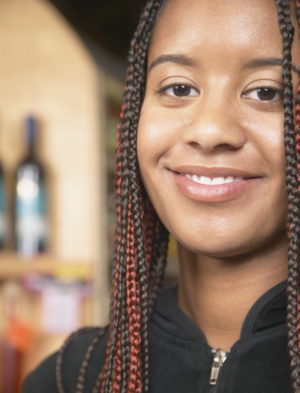

Aubrey
When I got to Culpepper, I started to feel a lack of motivation. At first, it was a deep sigh of relief: I had just finished high school, and that was a lot of homework. I don’t know what I expected, because in my mind I was like, “Yeah, I’m going to college and I have to do work”– but I didn’t really care that much. I don’t know exactly. There was something in me that was nonchalant. I lost my motivation. I wasn’t near my mom anymore, and I wasn’t running away from that anymore. So, when I first got to Culpepper they invited a few of the minority students to a bridge program, to help us get the feel of college. They anticipated that we would have a little more problem acclimating because we were minority students. In the bridge program, I really didn’t do homework. I felt like I wasn’t working to the best of my ability. So, the professors I had… I just felt like they weren’t confident in my skill level or my ability to perform in college. That kind of made me anxious. I was like, “I can definitely do the work here,” but somehow I just could not bring myself to feel motivated.
Lucas
I’ve loved being in a small liberal arts school so much, I don’t know how I would do going to a large school. I’m not sure I want to be in a lecture hall with 300 students. One of the things I love about here is that with such small classes, even if the professor doesn’t speak directly to me I feel comfortable enough turning to my neighbor and asking, “Do you mind helping me out?” Being in a large school would be out of my comfort zone, but then again, for the last three years all I’ve done is be out of my comfort zone.
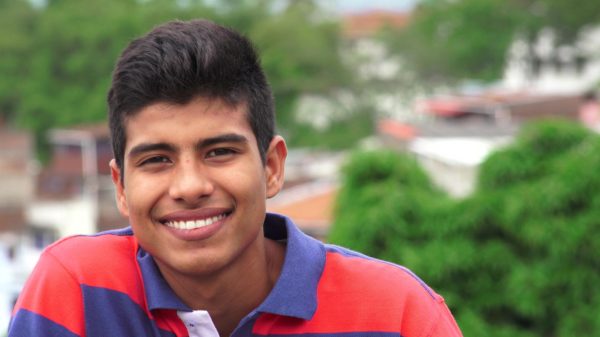

Dominique
During this last year, we’ve grown so much. I think it’s because our campus has acknowledged that racism still happens. Each class addressed it and tried to educate people who may not have acknowledged it before. When young African-American boys were killed by police officers, the black student union actually held open discussions on campus, and everybody was welcomed. They also invited the president of the campus, the students, and the deans. At the end of last semester there was also an incident where somebody had put a racial slur by our fountain. It was one of the carnival nights, and at about ten o’clock one of our African American students, a young lady, one of my friends, was walking back to her room. She saw it in chalk.
I came out of high school with like a 2.6 or 2.7 GPA. My ACT wasn’t the highest either. During the practice tests I ranged between a 19 and 22, but when I took the actual test I got an 18. Then I retook it and got a 19. So that’s where my ACT and GPA were. As I started applying to more colleges, I started to get desperate, because a lot of what my counselor was telling me was starting to make sense. And I was like, “I don’t want to go here if I’m going to fail out.” And so, we started to narrow it down. We found Norford College, an affordable college in-state that none of the students had gone to or really heard of. At Norford College I would basically have had school paid for. After high school that’s where I went. I got to Norford, and it was good for the most part. And then my grades started to slip and I wasn’t able to play. I just didn’t make the transition. I just didn’t get that work has to come first. Then reality hit me, like, “I really can’t play; what am I going to do?” Basketball was my everything.
Malik


Sophia
I remember we had to apply to seven different universities, but being undocumented I didn’t have the money, and my parents weren’t really supportive. It was devastating. I attended this high school that was like, from the first day, you are going to graduate and you are going to go to college. I felt like I had worked so hard for nothing. And then, just seeing all my friends get acceptance letters, I was happy for them, but I felt like…my parents are hard workers, and I wanted to make them proud. I wanted to say, “Mom, you worked so hard for me; I’m going to buy you your house.” I wanted to say that, and I couldn’t.
Eric
There was one thing that was really eye opening. I actually ended up going to jail for three days. It was related to drugs. Having your schedule set out for you, not having the freedom to do what you want when you want to–that was the pivotal point. To see the bars, to only be able to eat at a certain time, and if you don’t eat you are not eating for the rest of the day, not being able to move outside of this little square–it was a horrible experience. I would say that my lowest point was my first night in jail. I just laid in my bed, and there were so many scenarios that went through my head about how I had messed up my life. I honestly thought I had no chance to fix it. It was definitely a changing point.
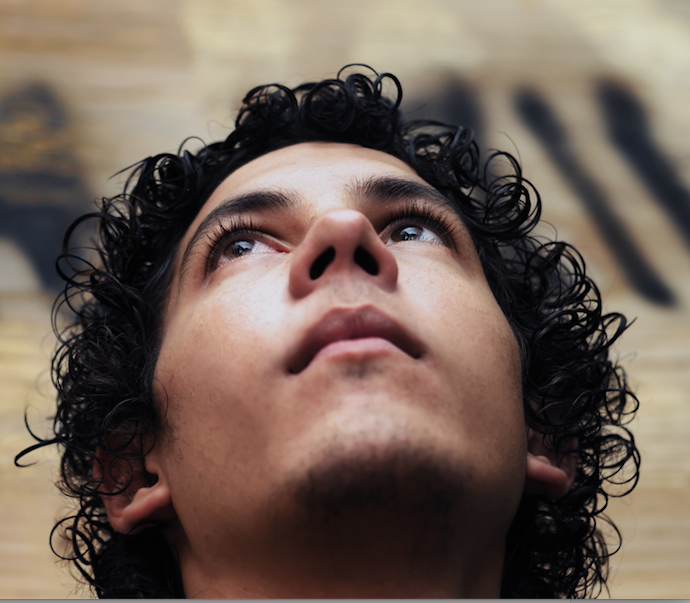

Emmy
I have a very strong personality. A lot of the friends I have become really close to here have told me that I intimidate people, and so people don’t speak to me. In the classroom I am speaking up a lot more, but here…its not just being gay; it’s also being Hispanic. I take a lot of computer science classes, and in my computer science classes I am the only Hispanic. There are no African American or Hispanic students… It’s also hard being a female in my computer science classes. There were a lot of international students who would say out loud that they thought women shouldn’t be taking classes. So it was hard: one, being female; two, being gay; and three, being Hispanic. Usually the professor would just ignore the students’ comments. I used to get mad, but I mean, it’s their traditions. It’s where they’re from. I have definitely had to learn to be more patient.